"Boost your self-esteem!"—you see this phrase everywhere. But no matter how hard you try to raise it, it keeps falling back down. Sound familiar?
The truth is, what you really need might not be "self-esteem" but "self-acceptance." These two concepts seem similar, but they're fundamentally different.
The Crucial Difference Between Self-Esteem and Self-Acceptance
Most people think self-esteem and self-acceptance are the same thing.
But these two are quite different. In fact, understanding this difference is the first step toward lasting inner peace.
| Self-Esteem | Self-Acceptance |
|---|---|
| "I'm great because I can do X" | "I'm okay even if I can't do X" |
| "I'm valuable because I'm better than others" | "This is me, flaws and all" |
| DOING-based = Conditional | BEING-based = Unconditional |
Self-esteem places value on "the self that can achieve things." When you succeed at work or receive praise, your self-esteem rises.
But when you fail or face criticism, self-esteem crumbles easily.
Self-acceptance is different. It's the unshakeable foundation of "I am who I am, whether I succeed or fail."
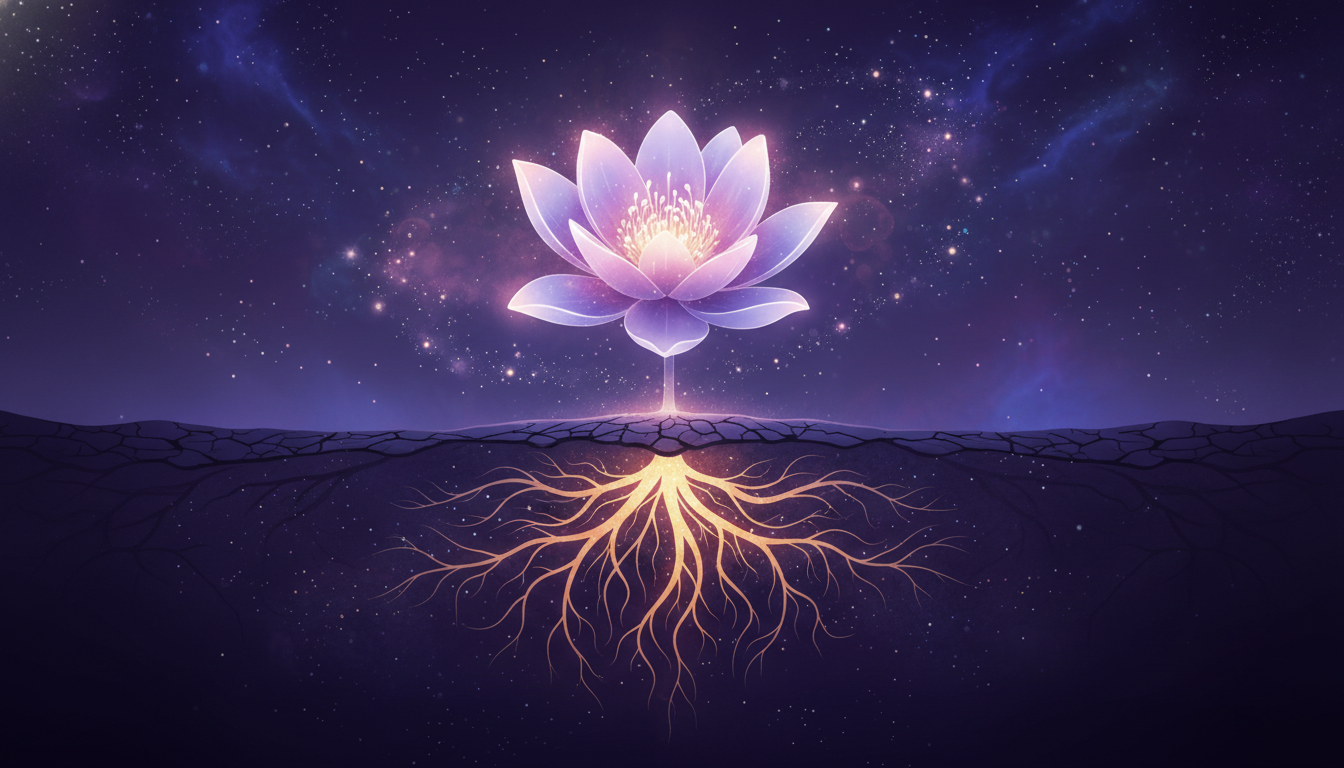
Self-Esteem is the "Flower," Self-Acceptance is the "Roots"
Let's think about this difference using the metaphor of a tree.
Self-esteem is like the flowers and leaves that change with the seasons.
In spring, they bloom beautifully. In summer, they're lush and green. But in autumn, they fall. In winter, the tree looks bare. The appearance is always changing.
Meanwhile, self-acceptance is the roots.
Invisible from above ground, but quietly supporting the tree through every season. Even when flowers scatter and leaves fall, the tree itself doesn't collapse.
Are you only focused on how beautiful your flowers look?
"I'm valuable today because I was praised"
"I'm worthless today because I failed"
This cycle is like being tossed around by the seasons.
What we truly need to nurture isn't the flowers, but the roots—not "I am good" but simply "I am."
Self-Acceptance is "Accurate Self-Observation"
The word "acceptance" might sound complex—like psychological jargon or a spiritual concept.
But let's think about it more simply.
Self-acceptance is accurate observation of your current state.
For example, imagine you ate a whole bag of chips at midnight while on a diet. Most people start a pointless mental debate at this point.
Common Reaction Patterns
❌ Self-criticism:
"I did it again... I'm so weak. I'm such a failure."
→ A completely unproductive spiral of shame
❌ Forced positivity:
"It's fine! I'll start fresh tomorrow! Eating vegetables will cancel it out!"
→ Groundless optimism that avoids the real issue
Self-criticism only kills motivation. Forced positivity only distracts from the problem. Neither leads to actual resolution.
◎ Self-acceptance (accurate observation):
"Well, I ate the chips. ...They were pretty good, actually."
That's it.
The fact that you ate can't be changed. Without adding labels of "good" or "bad," simply acknowledge the fact and your current feeling.
"Oh, I'm feeling tired right now."
"Oh, I'm feeling irritated right now."
Monitoring your state in this neutral way is the first step toward making calm, clear decisions.
Practical Ways to Develop Self-Acceptance
1. Practice Separating Facts from Interpretations
In daily life, practice distinguishing "facts" from "interpretations."
For example, "It's raining" is a fact. "This is the worst" is an interpretation.
"My boss pointed out an error" is a fact. "I'm a failure" is an interpretation.
Training yourself to see only facts is the essence of journaling.
2. Say "Good job today" to Yourself in the Mirror
Every day when you look in the bathroom mirror, take 3 seconds to meet your own eyes. Then say:
"Good job today. You did well."
It might feel awkward at first. But the brain is simple—when the person in the mirror acknowledges you, it starts to believe "I am valued."
3. Make "Good enough" Your Mantra
Perfectionists often hold back, thinking "I can't share this unless it's 100%." But in life, there are many situations where 75% output is more valuable than waiting for perfection.
"It's not perfect, but it's good enough for now."
Say it out loud and force yourself to complete the task.
Summary: Grow Your Roots
Self-esteem is the "flower" that rises and falls with external validation.
Self-acceptance is the "roots" that support you through any situation.
What we truly need isn't to bloom beautiful flowers—it's to grow deep roots.
Not "what you do" (Doing), but "how you are" (Being)—just holding this perspective can gradually lighten your heart.
Nurture Self-Acceptance with Soul Compass
Daily reflection with Soul Compass is a small practice in cultivating self-acceptance. A moment to observe "how was I today?" without judgment.
If you're tired of trying to bloom, perhaps it's time to start growing your roots.
What's Your Soul Archetype?
Discover your inner tendencies with 5 questions (about 3 minutes)
Take Free QuizRelated Articles
Written by
Soul CompassEntrepreneur with 20+ years in tech. Exploring the intersection of logic and intuition.