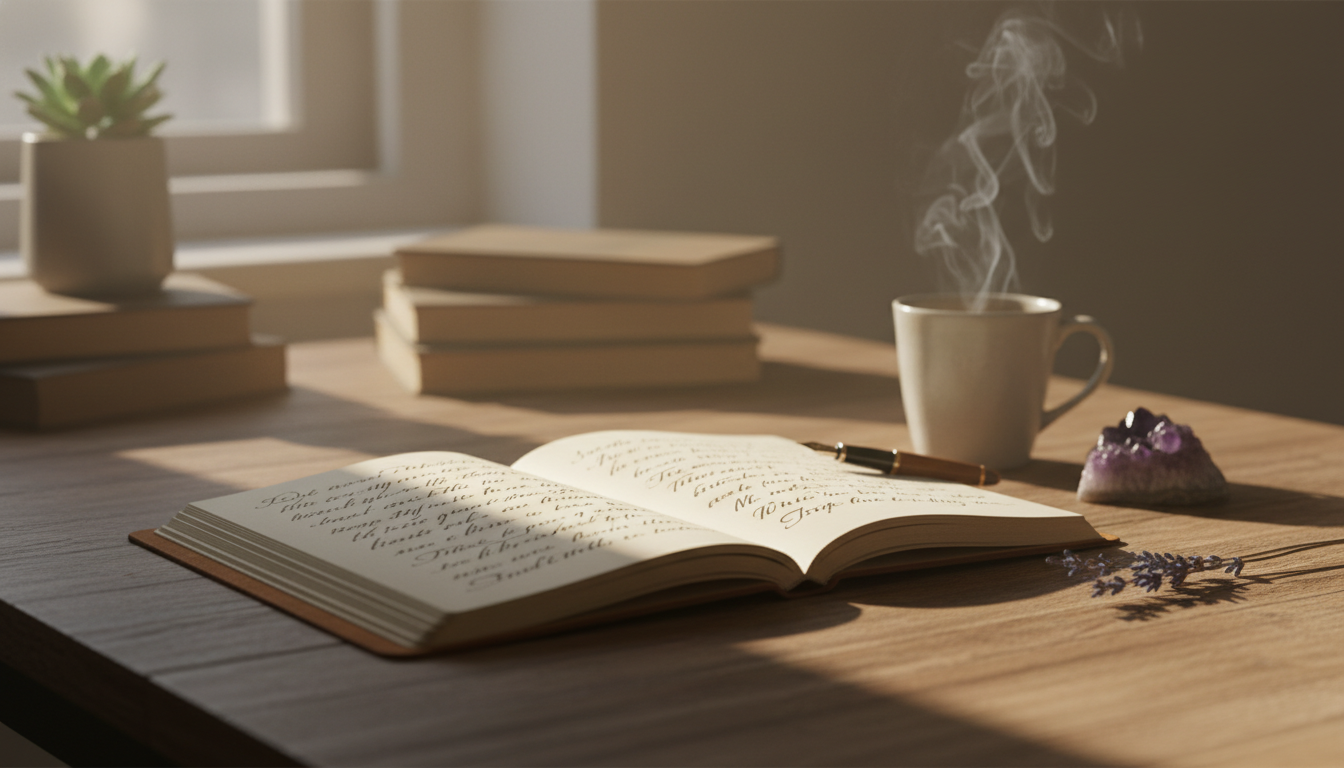
Morning Pages is a practice introduced by artist and author Julia Cameron in her groundbreaking book "The Artist's Way." It's a tool for unlocking creativity, but it's become so much more for practitioners worldwide.
The rule is beautifully simple: Every morning, first thing after waking, write three pages by hand. Write whatever comes to mind. That's it.
"Morning pages are three pages of longhand, stream of consciousness writing, done first thing in the morning." — Julia Cameron
This article is part of our complete guide
Read the Journaling GuideWhat Are Morning Pages?
Morning Pages aren't a diary. They're not meant to be art. They're not for anyone else to read. They're "brain drain"—a way to clear the mental clutter that blocks your creativity and clarity.
The Basic Rules
- Write first thing in the morning (before doing anything else)
- Write three pages longhand
- Write in stream-of-consciousness style (whatever comes to mind)
- Don't share them with anyone
- Don't judge what you write
- Do it every day
Why First Thing in the Morning?
In the early morning, your "inner critic"—that voice that judges and censors—is still asleep. Before logic and self-criticism fully wake up, you have access to a more authentic, unfiltered part of yourself.
Additionally, clearing your mind at the start of the day creates mental space for whatever comes next. You're essentially taking out the mental trash before the day begins.
The Profound Benefits
Mental Clarity
All those thoughts spinning in your head? Put them on paper. Once they're out, they stop taking up mental RAM. You'll feel lighter, clearer, more focused.
Unlocked Creativity
By silencing the inner critic, you make room for creative ideas. Solutions appear. Inspiration strikes. The creative well that seemed dry starts flowing again.
Self-Understanding
As you write day after day, patterns emerge. You discover emotions you weren't aware of, desires you'd suppressed, truths you'd been avoiding.
Problem-Solving
Writing about a problem engages your unconscious mind in finding solutions. You'll often have insights mid-sentence that surprise you.
Reduced Anxiety
Worries lose their power when transferred from mind to paper. The act of writing them down often reveals they're less overwhelming than they felt circling in your head.
How to Practice Morning Pages
What You Need
- A notebook (letter-size or A4 recommended)
- A pen you enjoy writing with
- A quiet space
- About 30-40 minutes
The Process
- Wake up and go straight to your notebook (before coffee, before checking your phone)
- Start writing whatever comes to mind
- Don't worry about grammar, spelling, or making sense
- Keep your hand moving until you've filled three pages
- When finished, close the notebook without rereading
What to Write When You Don't Know What to Write
Write "I don't know what to write." Write about being tired. Write about wanting coffee. Write about the weather. Write the same sentence repeatedly if necessary. Just keep the pen moving. Eventually, something deeper will emerge.
Common Questions
Q: Three pages is too much
A: Start with one page if needed. But there's magic in three pages—it's long enough to bore the inner critic into silence, allowing your authentic voice to emerge.
Q: Can I type instead of writing by hand?
A: Handwriting is strongly recommended. The slower pace of handwriting keeps you connected to your thoughts, and the inability to easily delete reduces self-censorship.
Q: I can't do it every day
A: Don't aim for perfection. Missing a day doesn't mean failure. Just start again the next day. Consistency matters more than perfection.
Q: Should I read what I wrote?
A: Cameron recommends not reading them for at least 8 weeks. Rereading triggers the inner critic and makes future writing more self-conscious.
Q: What if someone reads my pages?
A: Morning Pages are private. Keep them in a place where they won't be read by others. The privacy is essential for authentic expression.
What Morning Pages Reveal
Your True Desires
Beneath the "shoulds" and obligations, what do you actually want? Morning Pages help you hear your authentic voice.
Recurring Patterns
You'll notice themes that repeat: the same worries, the same excuses, the same dreams deferred. Awareness of patterns is the first step to changing them.
Your Inner Critic's Voice
You'll start recognizing when your inner critic is speaking versus when it's your authentic self. This distinction is powerful.
Morning Pages for Non-Artists
While created as a tool for artists, Morning Pages benefits everyone. You don't need to be creative or artistic to gain profound value from this practice. It's for anyone who wants clarity, self-understanding, and peace of mind.
Combining Morning Pages with Soul Compass
Morning Pages and Soul Compass are complementary practices. Morning Pages is free-flow brain drain; Soul Compass is guided reflection. Together, they create a complete self-awareness practice.
Consider this rhythm: Morning Pages in the morning to clear your mind and access creativity. Soul Compass in the evening to reflect on your day with intention. One clears space; the other fills it with meaning.
Morning Clarity, Evening Reflection
Pair Morning Pages with Soul Compass for complete self-awareness
Start FreeWritten by
Soul CompassEntrepreneur with 20+ years in tech. Exploring the intersection of logic and intuition.