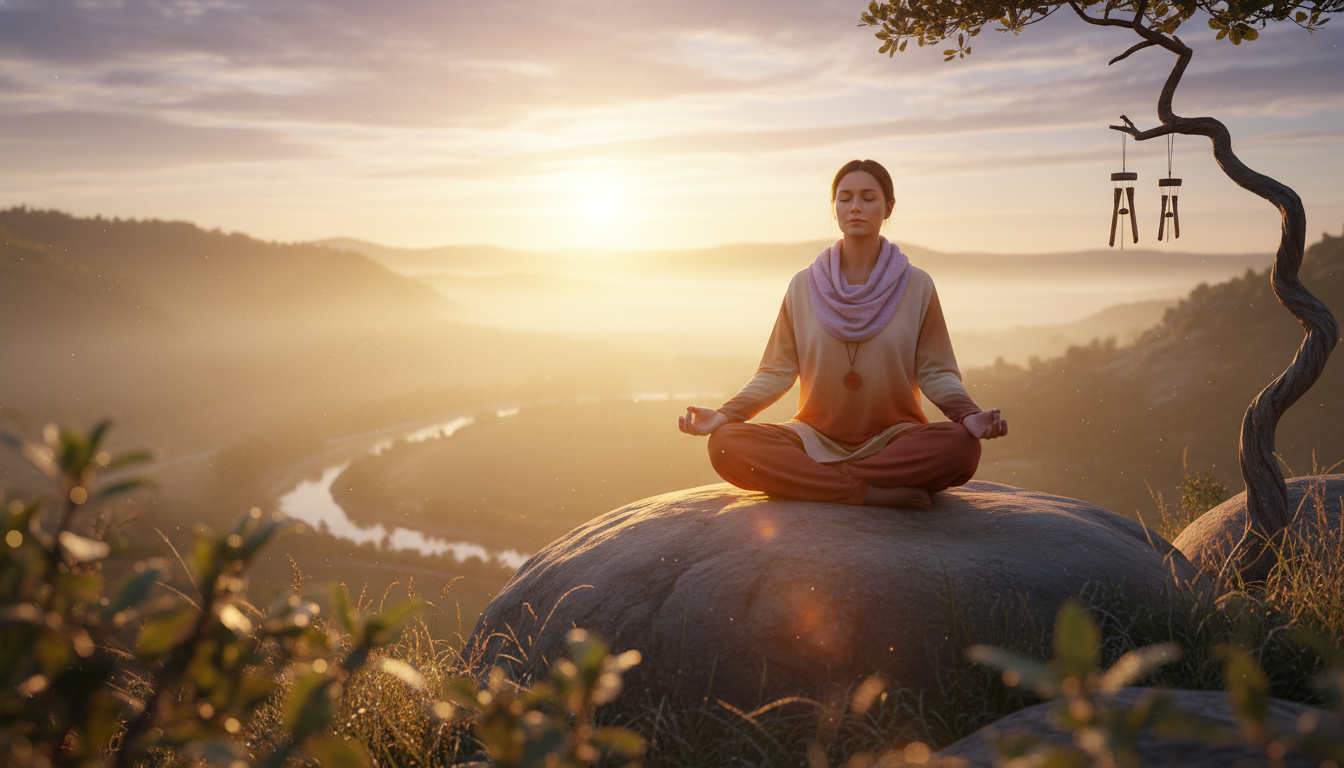
Most of us start our mornings in reactive mode: alarm blares, we grab our phones, check notifications, and immediately feel behind. What if instead, you could begin your day with clarity, calm, and intention?
Morning meditation is the practice of dedicating the first minutes of your day to mindfulness. Research shows this simple habit profoundly impacts mental health, focus, stress levels, and overall life satisfaction.
You don't need special equipment, hours of time, or previous experience. Even 5-10 minutes of morning meditation can transform your day—and eventually, your life.
This article is part of our complete guide
Read the Mindfulness GuideWhy Meditate in the Morning?
Your Mind Is Naturally Calm
Upon waking, your brain transitions from theta waves (dreaming) to alpha waves (relaxed alertness). This state is ideal for meditation—your mind is naturally quiet before the day's thoughts and stresses accumulate.
Think of your morning mind like fresh snow—untouched and pristine. Once the day begins, it gets trampled by thoughts, worries, and stimuli. Morning meditation lets you work with that pristine state.
You Set the Tone for Your Day
How you start your day influences how the rest unfolds. Beginning with meditation creates a foundation of calm and intention that carries through your activities. Instead of being reactive, you become responsive.
Better Consistency
Life gets busy, and evening meditation often falls victim to exhaustion or schedule conflicts. Morning meditation, done before life makes demands, has the highest adherence rate. You do it before you can talk yourself out of it.
Enhanced Focus Throughout the Day
Studies show that morning meditation improves sustained attention and cognitive performance. A 2018 study in the journal Mindfulness found that even brief morning meditation significantly enhanced focus and reduced mind-wandering throughout the day.
"Meditation is not about stopping thoughts, but recognizing that we are more than our thoughts and our feelings." —Arianna Huffington
The Science-Backed Benefits
Reduced Stress and Anxiety
A comprehensive review in JAMA Internal Medicine analyzed 47 studies and concluded that meditation significantly reduces anxiety, depression, and pain. Morning meditation specifically helps you face daily stressors from a place of groundedness rather than reactivity.
Improved Emotional Regulation
Regular meditation strengthens the prefrontal cortex (responsible for executive function) while calming the amygdala (the brain's alarm center). This means you're less likely to be hijacked by emotions and better able to respond thoughtfully to challenges.
Better Sleep
Paradoxically, morning meditation improves sleep quality. By reducing overall stress and establishing a calm mental baseline, you're less likely to carry tension into evening hours. Research shows meditators fall asleep faster and experience deeper, more restorative sleep.
Enhanced Creativity and Problem-Solving
The calm, spacious mind cultivated in morning meditation creates fertile ground for creative insights. Many meditators report their best ideas emerge during or immediately after their practice.
Physical Health Benefits
Studies show regular meditation lowers blood pressure, reduces inflammation, strengthens immune function, and may even slow cellular aging. The mind-body connection is real, and morning meditation optimizes it.
How to Start a Morning Meditation Practice
Step 1: Keep It Simple
Forget the idea that you need a meditation cushion, incense, or perfect posture. Start where you are, with what you have. You can meditate sitting on your bed, in a chair, or even lying down (though sitting is better for staying alert).
Step 2: Start Small
Don't aim for 30 minutes on day one. Start with just 5 minutes. The goal is consistency, not duration. Five minutes every day beats 30 minutes once a week. As the habit solidifies, naturally extend the time.
Step 3: Choose Your Technique
There are many meditation styles. Here are beginner-friendly options:
Breath Awareness Meditation
The simplest and most universal technique. Sit comfortably, close your eyes, and focus on your natural breath. Notice the sensation of air entering and leaving your nostrils. When your mind wanders (it will), gently return attention to breath. That's it.
Body Scan Meditation
Systematically bring attention to different body parts, from toes to head. Notice sensations without judgment. This grounds you in physical presence and releases unconscious tension.
Loving-Kindness Meditation (Metta)
Cultivate compassion by silently repeating phrases like "May I be happy, may I be healthy, may I be at ease." Then extend these wishes to others. Research shows this practice significantly increases positive emotions and social connection.
Guided Meditation
Apps like Headspace, Calm, or Insight Timer offer excellent guided morning meditations. A teacher's voice can help keep you focused, especially when starting out.
Mantra Meditation
Silently repeat a word or phrase (like "peace," "om," or "I am calm"). The mantra anchors attention and creates a peaceful mental rhythm.
Step 4: Create a Ritual
Make meditation easier by building a simple ritual:
- Keep a meditation cushion or designated spot ready
- Wake up and meditate before checking your phone
- Maybe light a candle or play soft background sound
- Use the same time each morning if possible
Rituals signal to your brain that it's meditation time, making it easier to settle in.
Step 5: Be Patient with Your Mind
Your mind will wander. That's not failure—that's completely normal. Meditation isn't about having a blank mind; it's about noticing when your mind wanders and gently bringing it back. Each time you return attention to your breath or body, you're strengthening your focus muscle.
"You can't stop the waves, but you can learn to surf." —Jon Kabat-Zinn
Common Challenges (And How to Overcome Them)
"I Don't Have Time"
You have time to check your phone first thing—you have time to meditate. Even 3-5 minutes makes a difference. Consider that morning meditation often makes you more efficient throughout the day by improving focus, saving time overall.
"My Mind Won't Stop Thinking"
Good news: it's not supposed to. Meditation isn't about stopping thoughts; it's about changing your relationship with thoughts. You're learning to observe thoughts without getting swept away by them. Every time you notice you're thinking and return to breath, you're succeeding.
"I Fall Back Asleep"
Try sitting upright rather than lying down. Splash cold water on your face before meditating. Or do a few stretches first to wake your body. Some people find meditating after rather than immediately upon waking works better.
"I Feel Restless and Uncomfortable"
Restlessness is normal, especially at first. It's often a sign that you need meditation most—you're simply becoming aware of the constant mental agitation usually masked by distraction. Stick with it. The restlessness typically decreases within 5-10 minutes.
"I'm Not Doing It Right"
If you're showing up and making an effort, you're doing it right. There's no perfect meditation. The practice is simply being present, noticing when you're not, and returning. That's all.
A Simple 10-Minute Morning Meditation
Here's a complete practice you can start today:
Minute 1-2: Settle In
Sit comfortably with your spine upright but not rigid. Close your eyes or soften your gaze downward. Take three deep breaths—in through your nose, out through your mouth. Let your body relax.
Minute 3-4: Body Scan
Bring awareness to your body. Notice the sensation of sitting, your feet on the floor, hands in your lap. Scan from head to toe, releasing any obvious tension.
Minute 5-8: Breath Awareness
Return attention to your natural breath. Don't control it—just observe. Notice the cool air entering your nostrils, the warm air leaving. Count breaths if it helps: "in" (one), "out" (two), up to ten, then start over. When your mind wanders (it will), gently return to breath without judgment.
Minute 9-10: Loving-Kindness
Silently repeat: "May I be happy. May I be healthy. May I be at ease." Feel the words, letting warmth spread through your chest. Then extend: "May all beings be happy, healthy, and at ease."
Final Moment: Set an Intention
Before opening your eyes, set a simple intention for your day: "Today, I'll be patient" or "Today, I'll be present." Then slowly open your eyes, carrying that calm clarity into your morning.
Advanced Morning Meditation Practices
Combining Meditation with Movement
Try gentle yoga, tai chi, or qigong before seated meditation. Movement releases physical tension, making it easier to sit still and settle in.
Walking Meditation
If sitting feels too challenging, try walking meditation. Walk slowly and deliberately, focusing on the sensation of each step. This is particularly good if you have restless energy in the morning.
Visualization Meditation
Visualize your ideal day unfolding. See yourself moving through activities with calm, competence, and joy. Athletes use this technique to enhance performance—it works for daily life too.
Gratitude Meditation
After breath awareness, mentally list things you're grateful for. Let yourself feel the gratitude physically. This practice literally rewires your brain for positivity and contentment.
Making It Stick: Building the Habit
Use Implementation Intentions
Research shows that being specific about when and where you'll meditate dramatically increases follow-through. Not "I'll meditate in the morning" but "I'll meditate at 7 AM in my bedroom chair right after I wake up."
Track Your Streak
Mark each day you meditate on a calendar. Watching the chain grow motivates continuation—you won't want to break the streak.
Join a Community
Meditating alone is fine, but community support helps. Consider a meditation app with community features, a local meditation group, or an online community.
Be Gentle with Yourself
You'll miss days. Life happens. Don't let missing one day derail everything. Simply begin again the next morning. Consistency over time matters more than perfection.
Morning Meditation and Soul Compass
Morning meditation and daily reflection are beautiful companions. Meditation clears your mind and centers you; Soul Compass helps you process experiences and extract wisdom.
Consider this rhythm: Morning meditation to start your day with clarity and presence. Evening Soul Compass reflection to mindfully review your day and set intentions. Together, they create bookends of mindfulness around your daily life.
Soul Compass's AI-generated prompts complement meditation by giving you structure for reflection, while meditation gives you the mental spaciousness to engage deeply with those prompts.
Final Thoughts
Morning meditation is perhaps the single most impactful habit you can build. It costs nothing, requires minimal time, and the benefits compound exponentially over weeks and months.
You're not adding something to your life; you're creating space—space between stimulus and response, space between thoughts, space to simply be before doing.
Start tomorrow morning. Just five minutes. Sit comfortably, close your eyes, breathe naturally, and notice. That's all. See how you feel.
Those few minutes of stillness might just be the most productive part of your entire day.
Meditation Meets Reflection
Complement your morning meditation with evening reflection on Soul Compass
Start FreeWritten by
Soul CompassEntrepreneur with 20+ years in tech. Exploring the intersection of logic and intuition.